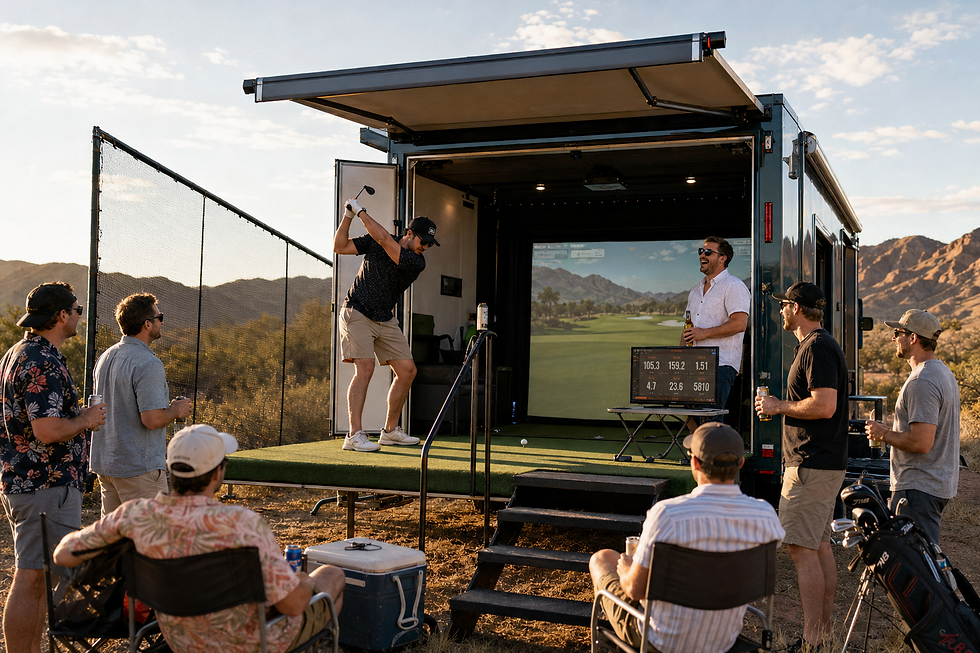
Innovative Corporate Party Ideas with a Mobile Golf Simulator for Team Building and Employee Appreciation
Most company parties run into the same problem: people show up, eat, make small talk with the people they already know, then drift toward the exit. A mobile golf simulator changes that fast.
It gives the room a natural reason to gather, cheer, laugh, compete, and relax. Nobody has to be a golfer. In fact, the first-time players usually make the night more fun because every wild swing becomes part of the story.
A mobile golf simulator works well because it brings the energy of a game to almost any event space. It can fit into a hotel ballroom, rented venue, country club, warehouse-style space, outdoor tent, or large private event room. It’s flexible enough for a casual appreciation party and polished enough for a high-budget celebration with food stations, prizes, music, and themed décor.
If you’re looking for Corporate party ideas that feel fresh without making the planning harder, this one deserves a serious look.

Why a mobile golf simulator works so well for company parties
A good party needs momentum. Food and drinks help, but they don’t always create interaction. A simulator gives people a shared activity that’s easy to understand and fun to watch.
That matters for work groups because shared low-pressure activities can help people connect across roles and departments. Research on workplace belonging and recognition keeps pointing to the same basic idea: people are more engaged when they feel noticed, included, and appreciated. A game-based event creates plenty of chances for that to happen naturally.
Here’s what makes the setup so useful:
It’s friendly to different skill levels.
A beginner can take a few swings and laugh it off. A regular golfer can chase the top score. Both can enjoy the same station.
It gives people something to talk about.
“Did you see that shot?” is a much easier opener than forced networking.
It works as entertainment and recognition.
The simulator can be the main attraction, a side activity, or part of a larger awards night.
It’s active without being exhausting.
Guests can play, watch, snack, and come back later.
It creates built-in memories.
Leaderboards, funny prizes, team photos, and short contests make the party feel less routine.
It also solves a common event planning issue: not everyone wants to dance, sing karaoke, or play intense sports. Golf simulator games are usually short, social, and easy to rotate through, so people can join in without feeling trapped.
Choose a format that matches the mood of the event
The best format depends on the group size, party length, budget, and overall vibe. A 50-person employee appreciation happy hour needs a different setup than a 300-person annual celebration.
Here are formats that work especially well.
The closest-to-the-pin challenge
This is the easiest format for mixed groups. Each player takes a few swings and tries to land the ball closest to the hole.
Why it works:
It’s quick.
It’s easy to explain.
Guests don’t need golf experience.
The leaderboard keeps people coming back.
Add small prizes for the top three scores, plus a “best swing face” or “most dramatic miss” award to keep it light.
The department scramble
For a more team-focused event, create small groups and let them combine their best shots. This is great for team building because nobody has to carry the whole score.
A scramble format rewards encouragement. Stronger players can help beginners, beginners can surprise everyone, and the team celebrates each good shot together.
Keep teams mixed if the goal is connection. Pair people who don’t usually work together, but avoid making it feel like a work assignment. Name teams after colors, snacks, local landmarks, or funny golf phrases instead of departments if you want a more relaxed feel.
The executive challenge
This one is perfect for employee appreciation. Invite senior leaders or managers to take swings while employees cheer, heckle politely, and predict the outcome.
Make it playful:
Employees guess the winning distance.
Leaders compete for a “most improved” prize.
Teams earn bonus points if their leader hits a target.
Managers donate prize cards to the winning employee team.
The point isn’t to show off skill. It’s to make leadership feel more human and approachable.
The open-play lounge
If the event leans more upscale, treat the simulator like a premium lounge activity instead of a tournament.
Guests can sign up for short time slots, try famous-style virtual holes, enjoy mocktails or cocktails nearby, and relax in soft seating between turns. This works well for holiday parties, client appreciation events, milestone celebrations, and annual gatherings with larger budgets.
Add a host to guide players, explain the game, and keep the line moving. That one detail can make the difference between “cool activity” and “smooth experience.”
The full tournament night
For groups that love competition, create a bracket or flighted tournament. Keep rounds short so the event doesn’t get stuck.
Use divisions like:
New players
Casual players
Experienced players
Mixed teams
This avoids the classic problem where one or two golfers dominate everything. If the event is meant to feel inclusive, prizes should reward more than skill. Give awards for team spirit, funniest moment, best comeback, and most creative stance.

Build the party around a theme people will actually enjoy
A simulator is the anchor, but the theme shapes the whole event. The right theme helps the party feel planned, not just like a rented activity placed in the corner.
Here are a few creative directions that can fit different buyer preferences and bigger budgets.
The clubhouse social
Think comfortable, classic, and relaxed. This theme works well for employee appreciation because it feels polished without being stiff.
Bring in:
Lounge seating
Small plates or sliders
Lemonade, iced tea, mocktails, beer, or wine
Soft lighting
Greenery and simple golf-inspired décor
A prize table with useful gifts
This format works especially well for a spring party, retirement celebration, leadership mixer, or end-of-quarter gathering.
The glow golf party
For a louder, more playful event, go with glow details. Use colored lighting, light-up cups, neon golf balls for décor, upbeat music, and a photo area with fun props.
The simulator screen already adds visual energy, so the glow theme fits naturally. This is a good choice for holiday parties, summer celebrations, and teams that prefer a less formal atmosphere.
Keep the lighting comfortable near the simulator. Players still need to see the hitting area clearly.
The around-the-world golf night
Build the event around famous golf destinations without naming specific courses. Each food station can represent a region, such as coastal California, the desert Southwest, Scotland-inspired pub fare, or tropical island snacks.
The simulator can rotate through different course styles during the night. Guests feel like they’re “traveling” between challenges while staying in one venue.
This is a strong theme for larger budgets because it leaves room for chef stations, décor, music, and premium prize packages.
The mini awards gala with golf challenges
If the party includes employee awards, the simulator can keep the night from feeling too formal.
Structure the evening like this:
Arrival drinks and warm-up swings
Short recognition moments
Golf challenge round
Food and social time
Final awards and prize presentation
This balances appreciation with fun. It also gives people a break between speeches, which helps the evening feel more alive.
The charity challenge
Tie each swing or winning score to a donation pool. Teams can play for a cause chosen by employees, or departments can compete to direct a donation to a nonprofit category.
Keep the rules simple. For example, every ball that lands on the target earns a small donation amount. This gives the event a feel-good purpose without making it heavy.
Add premium touches for larger budgets
A mobile golf simulator can scale up beautifully. If the budget allows, don’t just add more decorations. Add details that improve comfort, flow, and participation.
Premium hosting
A dedicated game host welcomes guests, explains the rules, tracks scores, and keeps the energy up.
Better food timing
Serving small bites near the simulator keeps guests engaged without interrupting play.
Comfortable seating
Lounge areas near the action let non-players still feel part of the fun.
Multiple play stations
For larger groups, extra golf bays or nearby games reduce waiting and keep the party moving.
Thoughtful prizes
Choose prizes people actually want, such as local dining cards, extra time off, upgraded team lunches, or experience gifts.
Custom score moments
Announce winners during the party, not days later. Recognition lands better when everyone is still there.
A larger budget also makes it easier to create zones. One space can be active and high-energy around the simulator. Another can be quieter for conversation. This helps guests choose their own pace.
That’s especially helpful for inclusive planning. Some people love being in the center of the action. Others prefer to watch, chat, and join one quick challenge later.

Plan the event so it feels easy, not crowded
The simulator will get attention, so plan the space around that. A little forethought prevents long lines, awkward waiting, and safety issues.
Give the simulator enough room
Ask the provider how much space the setup needs, including ceiling height, swing area, screen distance, and room behind the player. Don’t guess. Golf swings need space.
Also think about:
Where guests will stand to watch
Where the line will form
Whether food tables are too close
How sound will carry
Where prizes and scoreboards will sit
A clear layout makes the activity feel inviting.
Keep games short
Short rounds are your friend. For most parties, each turn should take only a few minutes. If guests wait too long, they’ll drift away.
Good party-friendly options include:
Three-swing closest-to-the-pin
Longest drive with one practice swing
Team target challenge
Beat-the-host challenge
Quick playoff for top scorers
If the party has more than 100 guests, plan for sign-ups, timed rounds, or multiple activities nearby.
Use a host or scorekeeper
A host keeps the simulator from becoming confusing. That person can invite shy guests to try, explain the rules, celebrate funny moments, and move players through the game.
The host doesn’t need to be loud or cheesy. The best version is warm, clear, and upbeat.
Create prizes beyond first place
If every prize goes to the best golfer, the event starts feeling like a sports contest. Spread the fun.
Try awards like:
Best first-time swing
Biggest comeback
Most accurate team
Most enthusiastic cheering section
Funniest reaction
Best team name
Most creative putting pose
These small categories make the event feel more like employee appreciation activities than a strict competition.
Make it easy for everyone to join in
A golf simulator can bring people together, but only if the event feels welcoming. Don’t assume everyone knows golf rules or wants to compete.
Set the tone early. Use simple language on signs and announcements. Say “take three swings and try to get close to the target” instead of using golf terms that only experienced players know.
A few easy ways to lower the pressure:
Offer practice swings.
Let people play in pairs.
Invite teams to choose a “designated swinger” for each round.
Keep cheering positive.
Avoid jokes that single out someone’s ability.
Give non-players ways to win, like score guessing or team spirit awards.
This is where the simulator shines as both team building, employee appreciation activities, and entertainment. It lets people participate at different comfort levels while still sharing the same experience.
For remote or nationwide teams gathering in one place, the activity also travels well. A mobile setup can be planned around many types of venues across the U.S., which makes it easier to bring the same experience to different regions or annual events.

Build a schedule that keeps the energy moving
A strong event has rhythm. Guests should know what’s happening without feeling controlled.
Here’s a simple three-hour flow that works for many company parties:
Time | Activity | Why it works |
0:00 to 0:30 | Arrival, food, practice swings | Guests settle in and get curious. |
0:30 to 1:15 | Open challenge round | Everyone gets a low-pressure first turn. |
1:15 to 1:30 | Short recognition moment | Appreciation stays central without taking over. |
1:30 to 2:15 | Team challenge or leader challenge | The room gets louder and more social. |
2:15 to 2:45 | Final playoff and dessert | The top scores get attention while guests enjoy food. |
2:45 to 3:00 | Awards and thank-you moment | The event ends with shared celebration. |
For a larger party, stretch the timeline and add sign-up waves. For a smaller group, keep it more casual and let guests replay.
The key is to place recognition moments near the fun, not far away from it. If someone wins an award and then immediately gets cheered on at the simulator, the appreciation feels personal and memorable.
Don’t forget the atmosphere around the game
The simulator is the centerpiece, but the surroundings shape the mood.
Music should be upbeat but not so loud that the host has to shout. Lighting should feel festive while keeping the hitting area clear. Food should be easy to eat standing up or between turns. Drinks should be placed far enough from the play area to avoid spills.
Good signage helps too. Keep it simple:
“Take 3 swings”
“Closest shot wins”
“Cheer loudly”
“No golf experience needed”
“Funniest miss gets a prize”
One of the best tricks is to start with a confident volunteer. Ask a friendly manager, event host, or outgoing employee to take the first swing and laugh through it. Once people see that the game isn’t too serious, they’ll join faster.
A mobile golf simulator turns appreciation into a shared experience
The best company parties don’t need to be complicated. They need a reason for people to connect, laugh, and feel valued.
A mobile golf simulator gives you that reason. It can be casual or high-end, competitive or relaxed, simple or fully themed. It works for beginners, golf fans, spectators, and people who mostly came for the snacks.
Start with the goal. If the event is about team connection, choose team challenges and mixed groups. If it’s about appreciation, build in awards, prizes, and playful recognition. If the budget is larger, add comfort, hosting, food stations, and thoughtful details that make the experience feel smooth.
Plan the space well, keep the rules simple, and celebrate more than the best score. Do that, and the party becomes more than another date on the calendar. It becomes the event people talk about on Monday.